By the An Space team, Đà Nẵng
Published · Updated · 14 min read
Vietnamese coffee is strong, dark-roasted Robusta brewed slowly through a small metal filter called a phin, then drunk black or with sweet condensed milk, hot or over ice. Vietnam is the world’s second-largest coffee producer, and the USDA forecasts 32.5 million bags for 2026/27, almost all Robusta. Here is what to order, from bạc xỉu to salt coffee.
What makes Vietnamese coffee different
Three things set Vietnamese coffee apart from what you drink at home: the bean, the brewing and the sweetness.
The bean is mostly Robusta. Vietnam’s official tourism site describes traditional coffee here as made from Robusta beans “which have a strong, bitter taste”, usually roasted in butter and brewed in metal filters (Vietnam Tourism). The result is thick, bold and low in acidity, closer to dark chocolate than to the fruity Arabica of a third-wave café.
The brewing is slow: no pressure and no machine in the classic version, only gravity and hot water. And sweetened condensed milk is the default partner for this intense brew. Once you know these elements, every drink on a local menu makes sense: each is strong phin coffee plus milk, cream, ice or something more surprising.
How a phin filter works
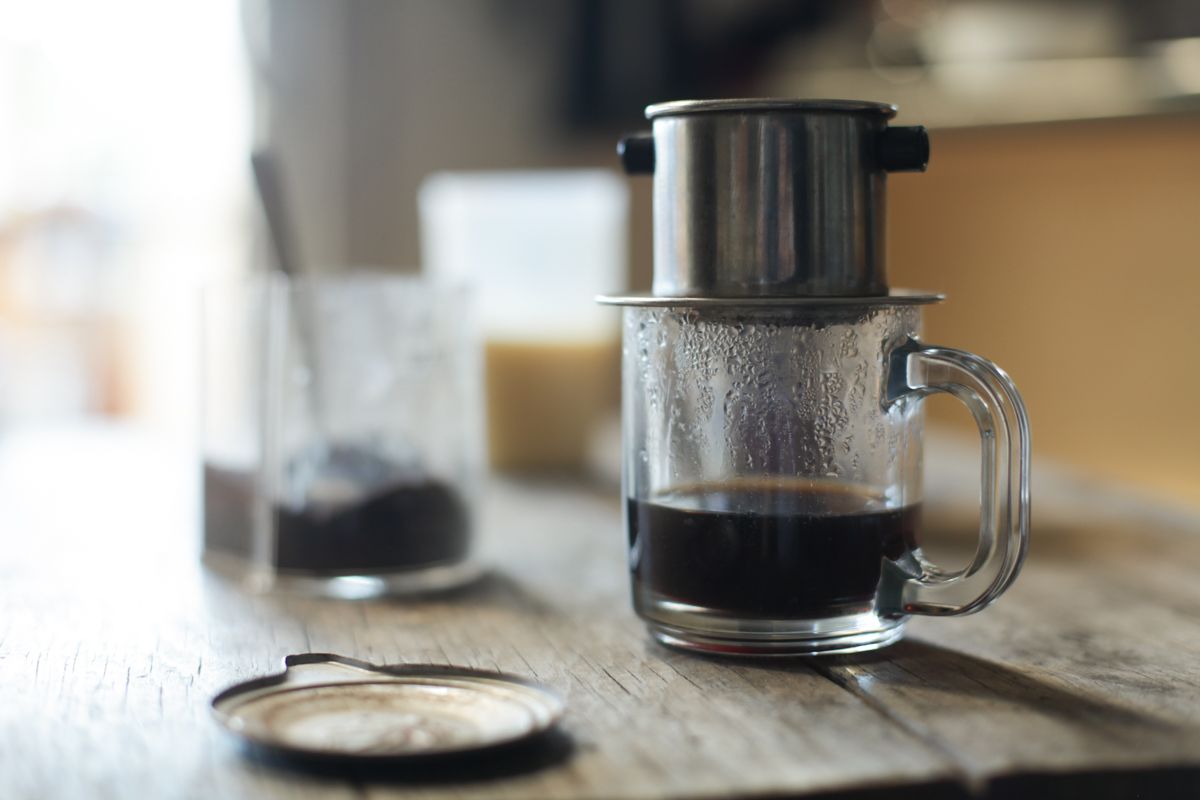
The phin is the heart of the whole ritual. Vietnam Tourism calls it a “small, gravity-fed metal drip filter” that sits on top of a glass, brewing coarse Robusta grounds with water at 90–95 °C in a slow drip (Vietnam Tourism).
A phin has four simple parts:
- The base plate with small holes, which rests on the rim of your glass.
- The chamber, a small cylinder that holds the ground coffee.
- The press, a thin perforated disc that sits on the grounds.
- The lid, which keeps the heat in while the coffee drips.
The barista puts ground coffee in the chamber, presses it lightly, pours in a splash of hot water to let the grounds swell, then fills the chamber and closes the lid. The coffee drips through, drop by drop. If it runs too fast, the coffee tastes thin; if it barely moves, the grind is too fine.
A good phin produces a small amount of very concentrated coffee, which is why it holds up so well to condensed milk and a glass full of ice. It is also why cafés feel unhurried: you sit, you wait, you watch the drip.
Cà phê đen and cà phê sữa: Vietnamese iced coffee and hot coffee
Almost every menu starts with the same two drinks, each available hot (nóng) or iced (đá).
Cà phê đen: black coffee, phin style
Cà phê đen means black coffee. Served hot, it is a short, strong cup. Served as cà phê đen đá, it is poured over ice, often with a little sugar already stirred in. If you want it unsweetened, you need to say so.
Cà phê sữa đá: the classic Vietnamese iced coffee
Cà phê sữa đá is what most people mean by Vietnamese iced coffee: phin coffee dripped onto sweetened condensed milk, stirred and poured over ice. Vietnam Tourism calls a cold cà phê sữa đá on a hot day “a quintessential Vietnamese experience” (Vietnam Tourism). VnExpress, quoting the Michelin Guide, traces it to the streets of Ho Chi Minh City (VnExpress International).
The hot version, cà phê sữa nóng, sometimes comes in a small glass standing in a bowl of hot water. Stir well: the condensed milk sinks to the bottom. For first-timers, the iced version is the safest start, sweet, strong and very refreshing in Đà Nẵng’s heat.
Bạc xỉu: the milky coffee from Saigon
If cà phê sữa is coffee with milk, bạc xỉu is milk with a little coffee. Vietnam Tourism describes it as “more milk less coffee” and calls Ho Chi Minh City “the birthplace of bac xiu” (Vietnam Tourism). According to the Michelin Guide, as reported by VnExpress, it was invented by the Chinese community in Saigon in the early 20th century (VnExpress International).
In practice, bạc xỉu is condensed milk, often some fresh milk, ice and a smaller amount of phin coffee on top. It is creamier and gentler than cà phê sữa đá. Order it if you usually drink a latte, if you are sensitive to caffeine, or if you want something cold and sweet in the afternoon without the full Robusta punch.
Salt coffee (cà phê muối): Huế’s gift to Vietnamese coffee
Salt coffee sounds like a mistake, but it has become one of the most popular drinks of recent years. It comes from Huế, the old imperial capital north of Đà Nẵng.
According to a 2023 report by VietNamNet, salt coffee was first made by the owners of Cafe Muối at 10 Nguyễn Lương Bằng in Huế, and had been loved in the city for more than a decade before it spread to cafés across the country (VietNamNet). It combines phin coffee and condensed milk with salted whipped cream, sometimes with a sprinkle of cinnamon.
Why salt coffee works
The drink does not taste salty in the way you might fear. Vietnam Tourism explains that the salt “cuts the bitterness, amplifies the sweetness, and creates a velvety texture” (Vietnam Tourism). Think salted caramel. Take the first sip through the salty cream, then stir it in gradually. Salt coffee is usually served iced, and it is now on many café menus in Đà Nẵng, so you do not need to travel to Huế to try it.
Egg coffee, coconut coffee and other Vietnamese coffee specialties
Beyond the classics, the country’s cafés have produced a handful of drinks you will not find anywhere else.
Egg coffee (cà phê trứng) from Hà Nội
Egg coffee was invented out of necessity in 1946 by Nguyễn Văn Giảng in Hà Nội, during a milk shortage caused by the war with France (Viet Nam News). Egg yolk whisked with sugar and condensed milk forms a thick, sweet foam on strong hot coffee, a little like tiramisu in a cup. It is easiest to find in the north, but some cafés in Đà Nẵng serve it too.
Coconut coffee (cà phê dừa)
Coconut coffee is an icy blend of coconut cream, condensed milk and Robusta (Vietnam Tourism). Some cafés make it as a slushy, others pour coffee over coconut milk and ice. One of our café guests, Thu M., wrote in a Google review (translated from Vietnamese): “The coconut milk coffee I ordered the other day was quite nice. The space is suitable for working.”
Yoghurt coffee and other creative cà phê
Cà phê sữa chua blends drip coffee with yoghurt, condensed milk and ice (Vietnam Tourism). You will also see peanut butter coffee, caramel coffee and fruit coffees on modern menus: playful variations on the same strong phin base.
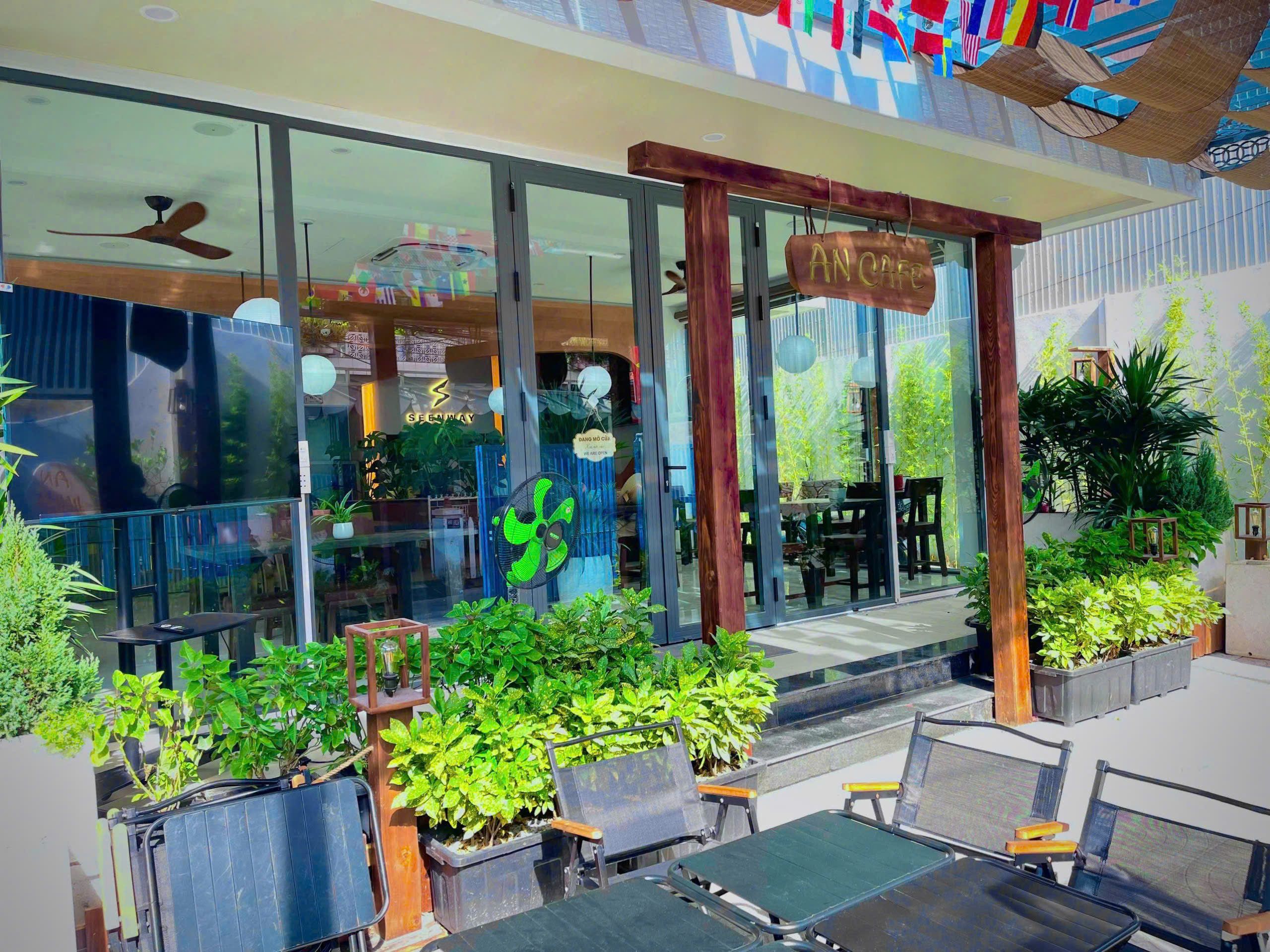
Want to try these drinks side by side? See the An Cafe menu: phin coffee, bạc xỉu, salt coffee and coconut coffee, every day from 07:00 to 16:00 on the ground floor of An Space in An Hải.
Robusta vs Arabica: where Vietnamese coffee grows
The US Department of Agriculture forecasts Vietnam’s production for the 2026/27 marketing year at 32.5 million 60-kg bags, of which 31.4 million bags are Robusta and only 1.1 million bags Arabica (USDA FAS, Coffee Annual, May 2026). Vietnam is the world’s second-largest coffee producer after Brazil (VietnamPlus).
Robusta coffee and the Central Highlands
Robusta is a hardy species with a bold, earthy taste, and it generally contains more caffeine than Arabica. It grows mainly in the Central Highlands, on red basalt soil. The coffee capital is Buôn Ma Thuột in Đắk Lắk: Viet Nam News reports about 210,000 hectares of coffee there and an annual harvest of more than 520,000 tonnes, over 30 percent of national output (Viet Nam News). Its coffee festival drew 120,000 visitors in March 2025 (Viet Nam News).
Arabica, specialty coffee and a little history
Arabica grows at higher altitudes, and Vietnam Tourism names Đà Lạt as a key hub for the country’s specialty coffee movement (Vietnam Tourism). The French brought coffee to Vietnam in 1857, and Buôn Ma Thuột was chosen for Robusta plantations in 1914 (VietnamPlus). Vietnamese drinkers then made it their own, with the phin, condensed milk and ice.
Café culture in Vietnam and Đà Nẵng
Coffee here is less a drink than a place to be. Vietnam Tourism counts “hundreds of thousands of cafés nationwide” (Vietnam Tourism), from tiny plastic stools on the pavement to design-heavy specialty bars.
A few habits are worth knowing:
- Early starts. Many street cafés are busiest in the early morning, before work and before the heat.
- Long stays are normal. One iced coffee can last an hour of conversation or people-watching.
- Free iced tea. Many local cafés bring a glass of weak iced tea (trà đá) with your coffee.
- Stools face the street. Watching the city go by is part of the experience.
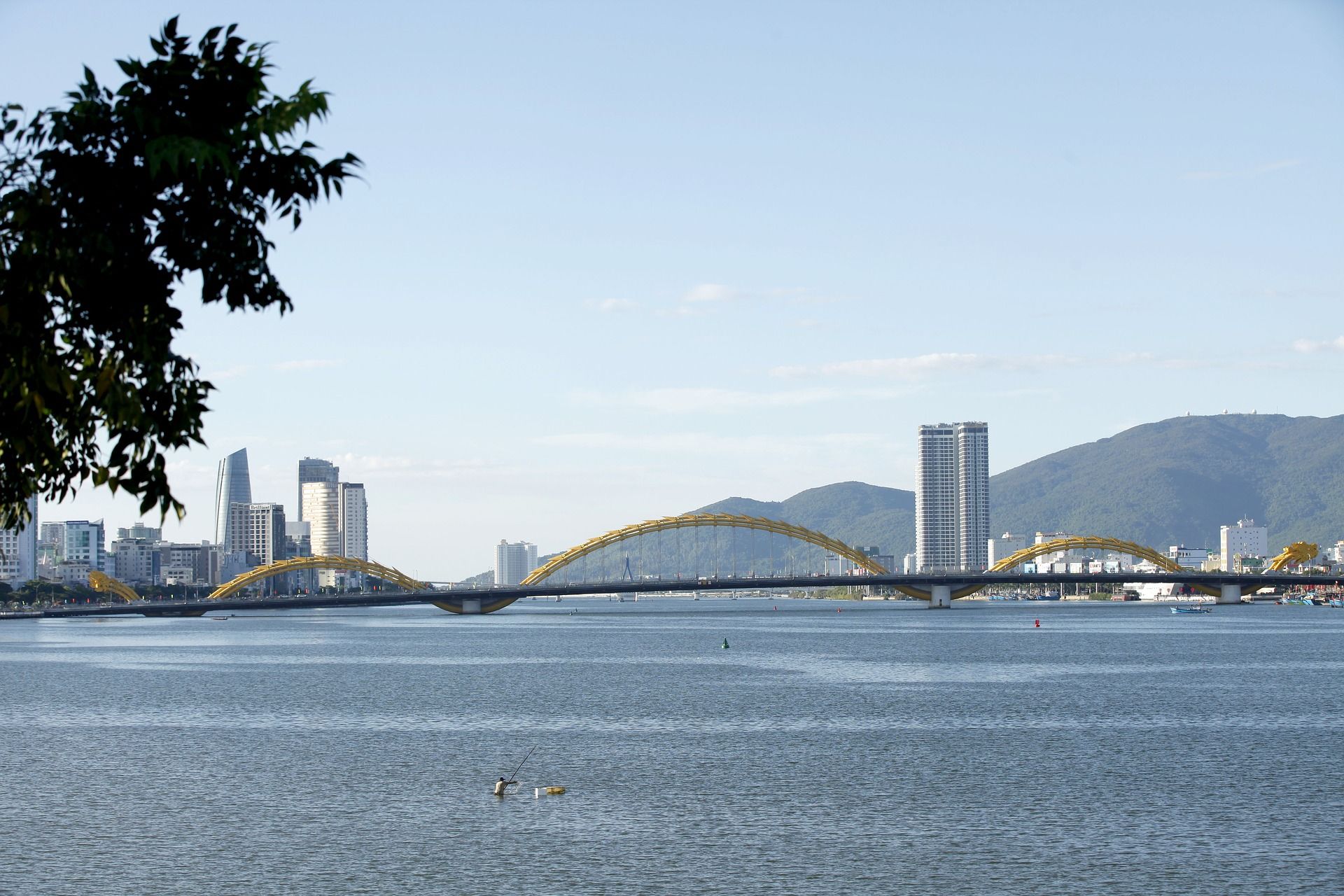
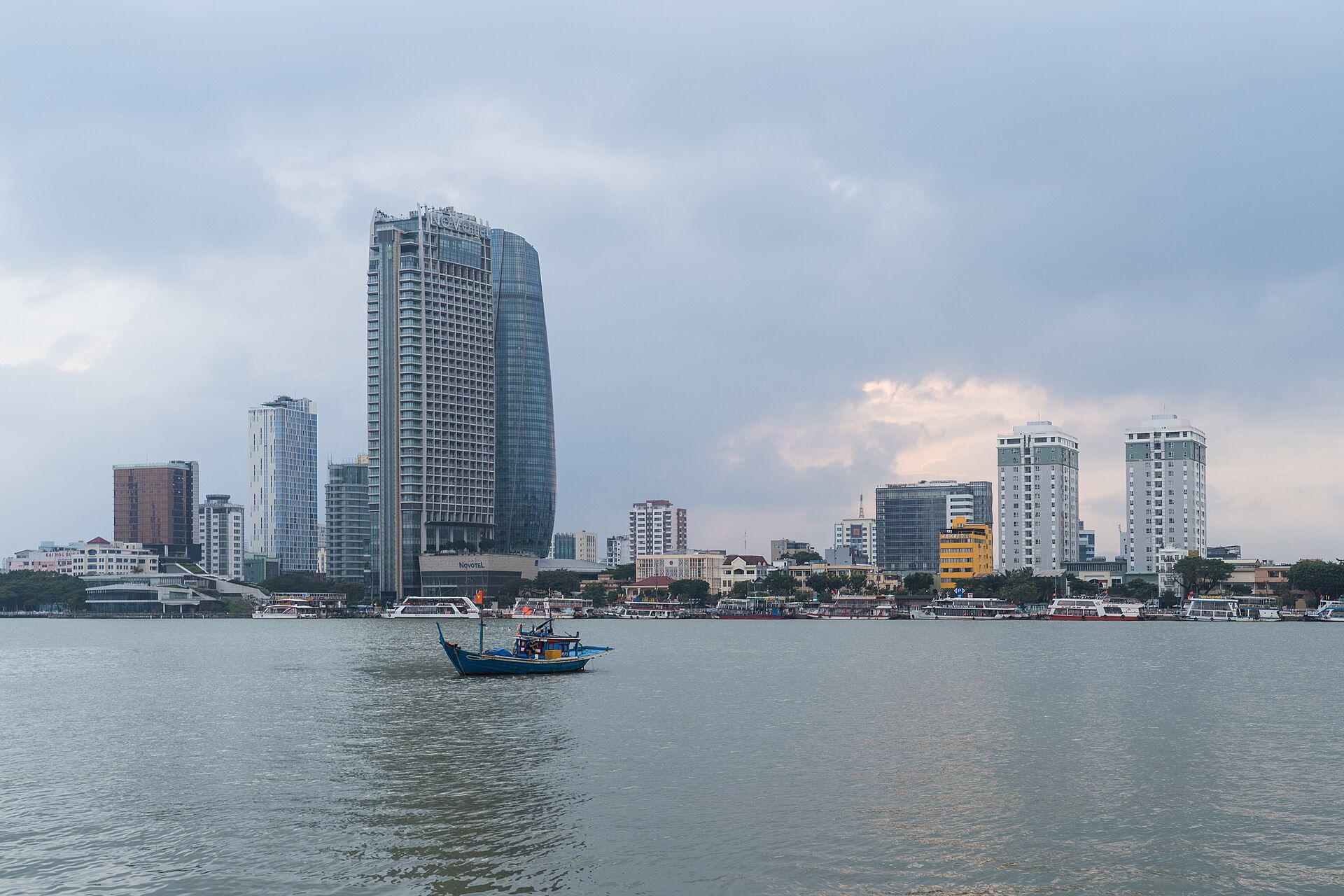
Coffee in Đà Nẵng mirrors this mix: simple street-side spots along the Han River, beach cafés near Mỹ Khê and modern cafés with fast Wi-Fi that double as offices. For remote workers, the café is often the first workplace in a new city, and our Đà Nẵng guide for digital nomads shows how that fits into everyday life.
Working from a café is widely accepted. Buy a drink every couple of hours and step outside for calls. If you need a proper desk, the An Space coworking space is opening soon right next door to An Cafe, with a waitlist already open.
How to order coffee in Đà Nẵng
You can point at the menu, but a few words make ordering easier and earn you smiles:
| You want | Say |
|---|---|
| Black coffee, iced / hot | cà phê đen đá / cà phê đen nóng |
| Coffee with condensed milk, iced / hot | cà phê sữa đá / cà phê sữa nóng |
| Milky coffee | bạc xỉu |
| Salt coffee | cà phê muối |
| Coconut coffee | cà phê dừa |
| Less sugar / no sugar | ít đường / không đường |
Black iced coffee is often sweetened by default in local cafés, so add không đường if you want it plain. With milk coffees, ít sữa (less milk) makes the drink less sweet and lets the coffee come through.
In tourist areas, menus are often in English too. Some cafés take payment at the counter when you order, others when you leave, so watch what other guests do.
What coffee costs in Đà Nẵng: An Cafe as an example
Prices depend on the place: small street-side cafés are usually the cheapest, specialty cafés and hotel bars charge more. As a concrete example, here are the coffee prices at An Cafe, as of October 2026:
| Drink at An Cafe | Price |
|---|---|
| Black coffee (phin or machine, iced or hot) | 25,000 ₫ |
| Coffee with condensed milk | 30,000 ₫ |
| Bạc xỉu | 30,000 ₫ |
| Salt coffee (cà phê muối) | 30,000 ₫ |
| Saigon-style black / with milk | 30,000 ₫ / 35,000 ₫ |
| Coconut milk, peanut butter or caramel coffee | 35,000 ₫ |
| Espresso | 35,000 ₫ |
There are also teas, matcha latte, iced cocoa, sodas, yoghurt drinks and juices; the full list is on the An Cafe page. Carry some small notes, as many small cafés prefer cash or a QR bank transfer.
Brewing phin coffee at home
A phin costs little, weighs almost nothing and turns any kitchen into a café. If you stay in Đà Nẵng for a few months, you will probably end up buying one.
- Choose the coffee. Buy a dark-roasted Robusta or a Robusta-Arabica blend, ground medium-coarse for phin.
- Prepare the glass. For cà phê sữa, put one or two spoons of condensed milk in the bottom.
- Add the coffee. Put about two heaped tablespoons in the chamber, level it and place the press on top without squeezing hard.
- Bloom. Pour a little water at around 90–95 °C, just enough to wet the grounds, and wait about 30 seconds.
- Fill and wait. Fill the chamber, close the lid and let it drip. If it runs through in under a minute, use a finer grind next time.
- Stir and ice. Stir the coffee into the milk and pour it over a glass full of ice.
Adjust one thing at a time (amount, grind, press) until the drip is slow and steady. Living above a café makes comparing easier: residents of the furnished apartments at An Space can walk downstairs for a phin coffee every morning.
FAQ: Vietnamese coffee
What is Vietnamese coffee?
Vietnamese coffee is usually dark-roasted Robusta brewed slowly through a small metal filter called a phin. It is drunk black (cà phê đen) or with sweetened condensed milk (cà phê sữa), hot or over ice. The result is strong, thick and low in acidity.
Why is Vietnamese coffee so strong?
It is mostly made from Robusta beans, which taste bolder than Arabica and generally contain more caffeine. The dark roast and the slow phin brew produce a small, concentrated cup, which condensed milk and ice balance.
What is a phin filter?
A phin is a small metal drip filter that sits on top of a glass. It has a perforated base, a chamber for the coffee, a press disc and a lid. Hot water drips slowly through the grounds by gravity, without pressure or electricity.
What is the difference between Vietnamese iced coffee and bạc xỉu?
Both are iced coffees with condensed milk, in different proportions. Cà phê sữa đá is mostly coffee with some milk, while bạc xỉu is mostly milk with a little coffee. Bạc xỉu is milder, a good choice if you usually drink lattes.
Where does salt coffee come from?
Salt coffee (cà phê muối) comes from Huế in central Vietnam, where it was first made at Cafe Muối on Nguyễn Lương Bằng street. It tops phin coffee and condensed milk with salted whipped cream. The salt softens the bitterness and makes the drink taste rounder.
Can you get egg coffee in Đà Nẵng?
Egg coffee is a Hà Nội specialty, invented there in 1946 during a milk shortage. It is easiest to find in the north, but some cafés in Đà Nẵng also serve it. Ask before you order, as it is not on every menu.
How do I order Vietnamese coffee without sugar?
Add “không đường” (no sugar), for example “cà phê đen đá, không đường” for an unsweetened iced black coffee. For a less sweet milk coffee, ask for “ít sữa” (less milk).
How much does a coffee cost in Đà Nẵng?
Coffee prices in Đà Nẵng vary with the type of café, and street-side places are usually the cheapest. At An Cafe, as of October 2026, black coffee costs 25,000 ₫, while coffee with condensed milk, bạc xỉu and salt coffee cost 30,000 ₫.
Sources
- Vietnam Tourism: 5 fantastic Vietnamese coffees (Robusta, butter roasting, cà phê sữa đá, bạc xỉu, yoghurt coffee)
- Vietnam Tourism: The secret art of Vietnamese coffee (phin, water temperature, salt coffee, coconut coffee)
- Vietnam Tourism: Vietnam’s coffee culture brews a global buzz (number of cafés, Đà Lạt specialty coffee)
- VnExpress International: Michelin’s guide to 6 coffees to experience Vietnam in a cup (origins of bạc xỉu and iced milk coffee)
- VietNamNet: Salt coffee, a Huế delicacy, conquers Hà Nội taste buds (2023)
- Viet Nam News: A trip around Việt Nam in eight coffees (egg coffee, 1946)
- USDA Foreign Agricultural Service: Vietnam Coffee Annual, VM2026-0016, 20 May 2026 (PDF)
- VietnamPlus: Vietnam cements status as world’s No.2 coffee producer, robusta powerhouse (May 2026)
- VietnamPlus: Vietnamese coffee reigns supreme on global coffee map (1857, Buôn Ma Thuột 1914)
- Viet Nam News: Festival to promote Buôn Ma Thuột City as a global coffee destination (area, harvest, share of output)
- Viet Nam News: Smell the coffee: Buôn Ma Thuột concocts huge attraction for tourists (9th coffee festival, 2025)